
Well what a start to the new year nothing but rain, rain and more rain. I recently returned from a trip to France and every passenger groaned when the captain informed us of the weather in Manchester, yes it was rain !!!!
As I write this newsletter the sun is out and the temperature has risen to 14 degrees, have we turned a corner with regard to the weather ??? lets hope so
I am also looking at a half built phase 6 glider which I started before Christmas, I am ashamed to say I have not touched it since Christmas, it has come to the stage where a lot of sanding is required something I would normally do outside even with a mask, balsa dust can cause serious breathing/lung issues.
February Indoor Meeting
I was not able to attend the meeting but I have had feedback to say the guest speaker was very good and people understand some if not all of the subject matter.
Newsletter Articles
I mentioned at the beginning of the year that a newsletter is only as good as its contents and I mentioned about members submitting articles for the newsletter.
Well this month Andy Moore has kindly submitted an article for you to read, I have also been promised another article from a member who is doing some work on a very interesting model engine, watch this space.
If think you might have something of interest for the newsletter then feel free to send me the article all I ask is that it is in Microsoft word format.
Andy’s articles is attached.
Are we starting to see the end of Lipo batteries ?
In recent years, if you wanted to fly a high current plane or drone, you would generally use a Lipo battery. If you had a low current draw craft and wanted/needed a little more duration then you would look at a Li-ion pack made with either 18650 or latterly 21700 cells.
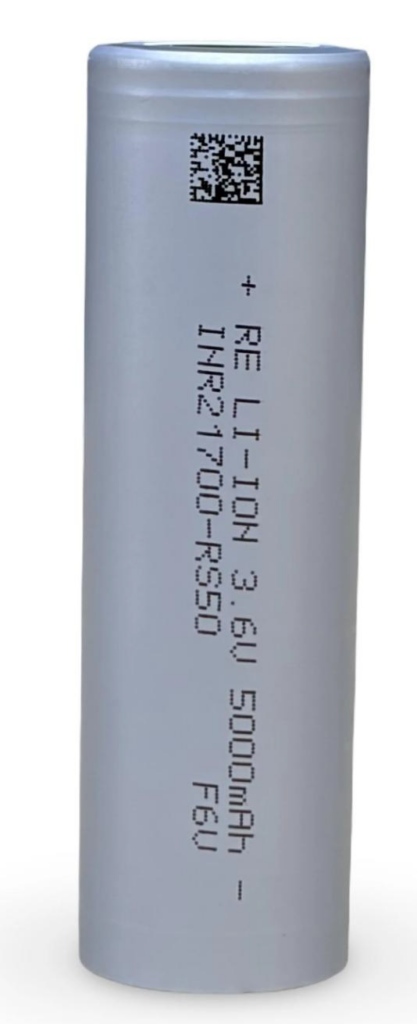
Li-Ions have some nice advantages over Lipo’s as an equivalent pack size is lighter and more of the actual capacity of the battery can be used as generally its not a great idea to run Lipo’s under 3.5v/cell (or 3.6v for longevity) whilst Li-Ions can safely be taken right down to about 2.8v/cell and even 2.5v/cell without damage. Li-Ion technology is also safer, lower-cost, longer-lasting & easier to live with although Lipo’s do have the advantage of different shapes as Li-Ions are basically cylindrical.
Things are a changing in the Li-Ion world with the advent of tabless cells – I’m not talking about cells with no tabs on the top here I’m talking about how the internals of the cell actually connect to the very top of the battery, the Cathode, which allows a much higher current to flow than we have previously seen.
Battery makers such as Ampace, Reliance & Eve now produce these tabless cells (NOTE: I don’t mention Molicel which many of us have built cells with & used over the past few years as they currently don’t make a tabless cell). 21700 Cells from these manufacturers are now supplied in capacities up to 5000mah (there’s 6000mah version coming out soon) with ratings of 50-70A constant & 12-150A burst ratings! We are even seeing the smaller 18650 cells with 50A constant & 100A burst ratings. The best of the bunch currently seems to be the Reliance RS-50 cells which is a 21700 cell with specs; of 70A max continuous and about twice this burst. This means a 2S Li-ion pack can in theory produce a continuous current of 140A with a burst amperage much higher – high enough for most needs.
The main downside of these new cells appears to be lack of availability with UK supplier often being out of stock or not yet carrying. NKon & Fogstar in the E.U. also seem to be in a similar position although I have seen them stocked recently.
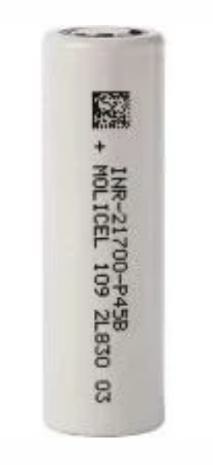
To get best ‘bang for buck’ it’s a case of sourcing the batteries yourself & making your own packs as commercial Li-Ion pack manufacturers are charging a premium on Li-Ion with poor cells being used and mark ups of anywhere between 100-200%.
Personally, I won’t be using our favourite Molicel P50b’s cells in the future but will be moving to these new tabless style cells with a new capacitor driven spot-welder capable of welding quite thick nickel strips.
Happy building!
Andy Moore
Thanks Andy for this article. I have seen some photos of the packs Andy is producing and they look very interesting with some big capacity packs, I am looking forward to seeing these packs in action when the flying season eventually gets under way.
One subject that Andy could perhaps cover is the charging of these cells, what type of charger is required ??? or will a standard charger that is capable of Li-on charging do the task ???
Perhaps Andy could give a talk at an indoor meeting as I know he has recently purchased some interesting kit for the manufacture of these packs.
Trainers/Trainees
The list of club trainers has been refreshed and their names are below.
A couple of the trainers are of an age where work does not get in the way and if contacted may be able to accommodate mid week sessions.
As a trainee get to know these trainers if needed ask for their phone numbers or use the Clubs messenger group to make contact with them.
Don’t rely on the same trainer all the time, all the trainers will offer the same amount of training and to the same standard/goal.
Training sessions are Wednesday evening and Sunday mornings weather dependant of course
Trainers :
Chris Vernon, Jason Reid, Jake Reid, Mark Conlin, Andy Harrison, Anthony Ollerton, Dave Hindley, Kev Watson
Regards Chris V