
At a recent visit to the field I thought spring had finally arrived and the flying would get going finally. Alas it was short lived, even though we are having a spell of dry weather the temperature has returned to what the Met office would call ‘Normal for the time of the year’. At the field at weekend the winter jackets and hats were still being used. One person turned up in shorts and T shirt, I did hear in mutter after ten minutes ‘I think I made the wrong clothing choice’
lets think positive and hope the warmer dry/warmer weather arrives
March Indoor Meeting
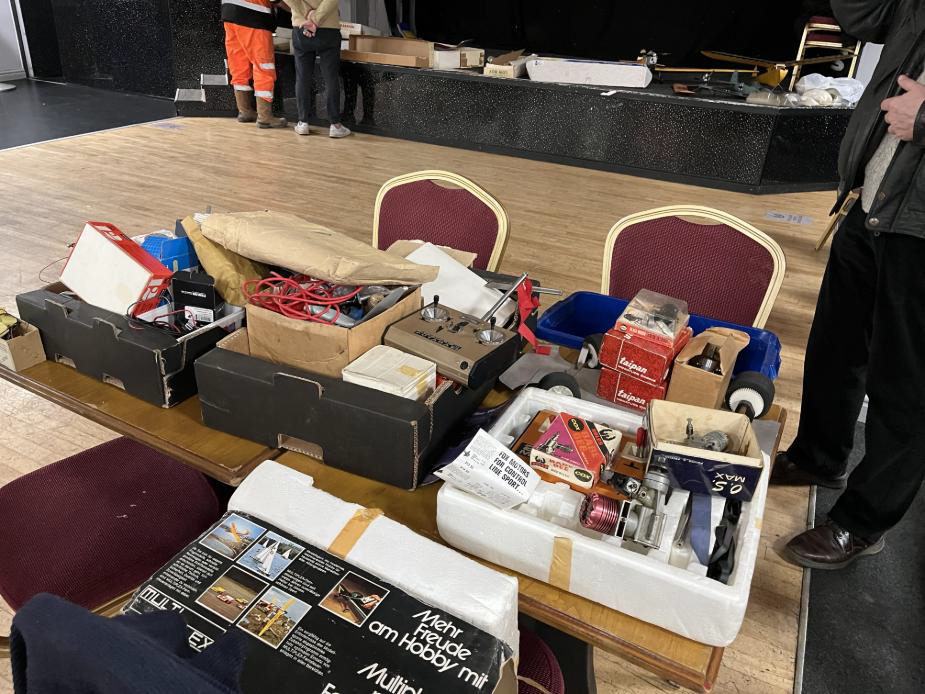
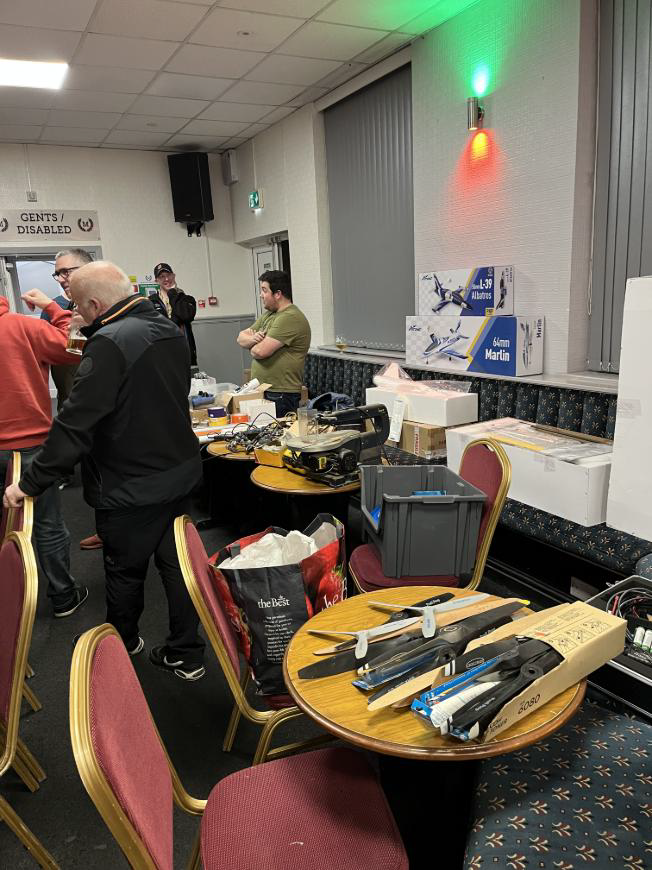
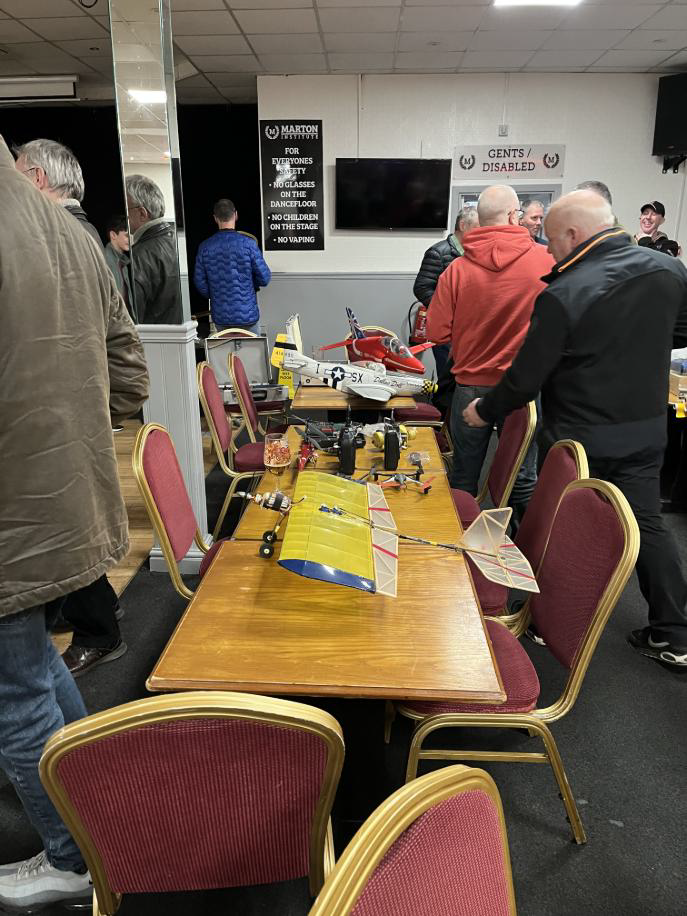
The March indoor meeting was the last indoor meeting of the winter season and was a ‘Bring and Buy’ evening.
It turned out to be a great evening with a good selection of things for sale including chargers, kits of which some where vintage kits, propellors, soldering irons etc;
Jake brought along some new planes he was selling along with some great deals on glues and battery plugs.
I noticed some people spent a small amount and some people spent quite a bit and where seen leaving the room with models under each arm.
Newsletter Articles
We have a couple of articles this month.
First is an article from Dave Hindley with ref; to an engine Jake asked him to look at. Jake picked this engine up from a job lot he bought from one of our fellow modellers estate from a long time ago, he was called Alan Clayton, a few of you may well remember him, he was blunt/brash Yorkshireman who said it as it was and had a dislike to club rules. He spent most of his flying time flying inverted !!! never seen anybody fly inverted so much, After somebody said something to him about it he turned up with an undercarriage on top of his wings and landed on them.
Anyhow back to the article, Dave has done an article which is below.
Rebuild of a Hirtenbirger HP 61 twin 2 stroke Engine. Part 1
So this starts with one of our club /committee members messaging me saying, I have some old engines if you fancy a look at them. Me being interested in engines in general says yes ok. A few days later this engine is handed over to me.
Now this engine was a “Special” hot engine in the 1970/80’s and made in Austria was a high performance ABC, schnerle ported engine, possibly the ultimate in glow power technology at the time. It was essentially two HP 61 engines bolted together, a 120 twin in line, not for the faint hearted.
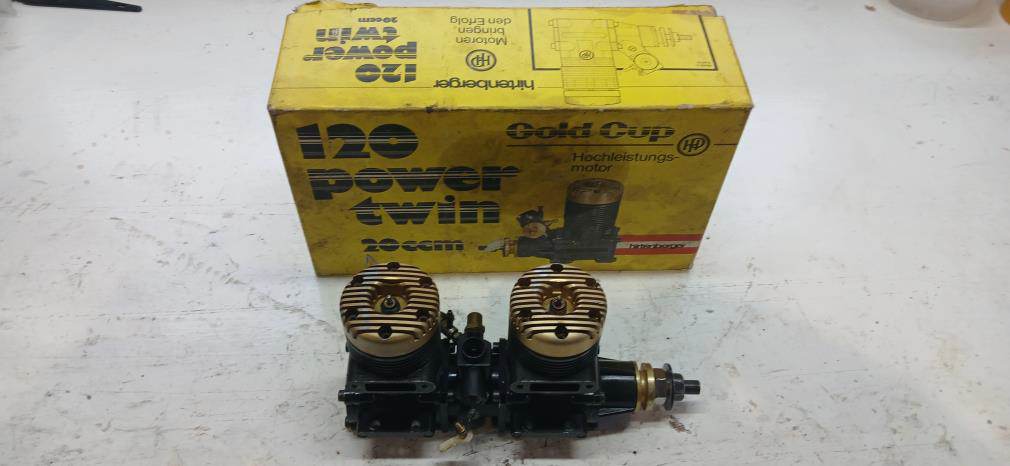
The engine was well and truly seized up, at this point hopefully “glued” up with congealed castor oil, from now on referred to as crud, and hopefully not mechanically seized. Disassembly started by removing all the allen screws in the crankcases and the cylinder heads. The cylinder heads came off reasonably easily but applying gentle force some of the bottom end parts refused to budge. I left the stubborn parts to soak in paraffin overnight. It was clear from the residue in the crank cases that a serious amount of brown crud was present, I can only think solidified castor oil.
24 hours later the brown crud was removed using a combination of scraping with a wooden scraper, nylon brush and paraffin, aerosol break cleaner, compressed air and vacuum cleaner suction. With some gentle heat and persuasion the remaining crank case parts came apart, followed by more crud removal. Careful removal of three crankcase gaskets, should be four? So need to make another one. Some bearings were then cleaned and eventually looked to be usable, the schnerle ports were completely full of crud. A combination of soft copper wire and pipe cleaners used to remove all the stuff that shouldn’t be there.
Although left in a terrible state, the parts of the engine looked only lightly used. No discernible wear on the cylinder bores, although ABC means chrome plated cylinder surface which is very hard so not prone to wear under normal conditions. Only one area of damage, a small dent/hole on the edge of one piston, probably from something getting in through the carb?
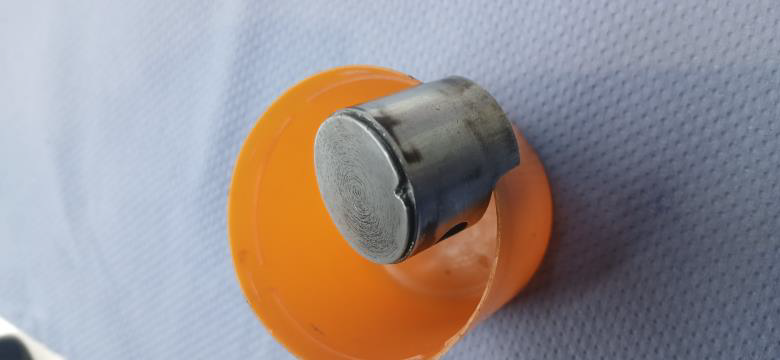
This however had clamped the piston ring and would result in lower compression since the piston ring was no longer floating. Careful removal of that ring and then attention to the dent allowed the piston ring to go back in and be free to move as it should.
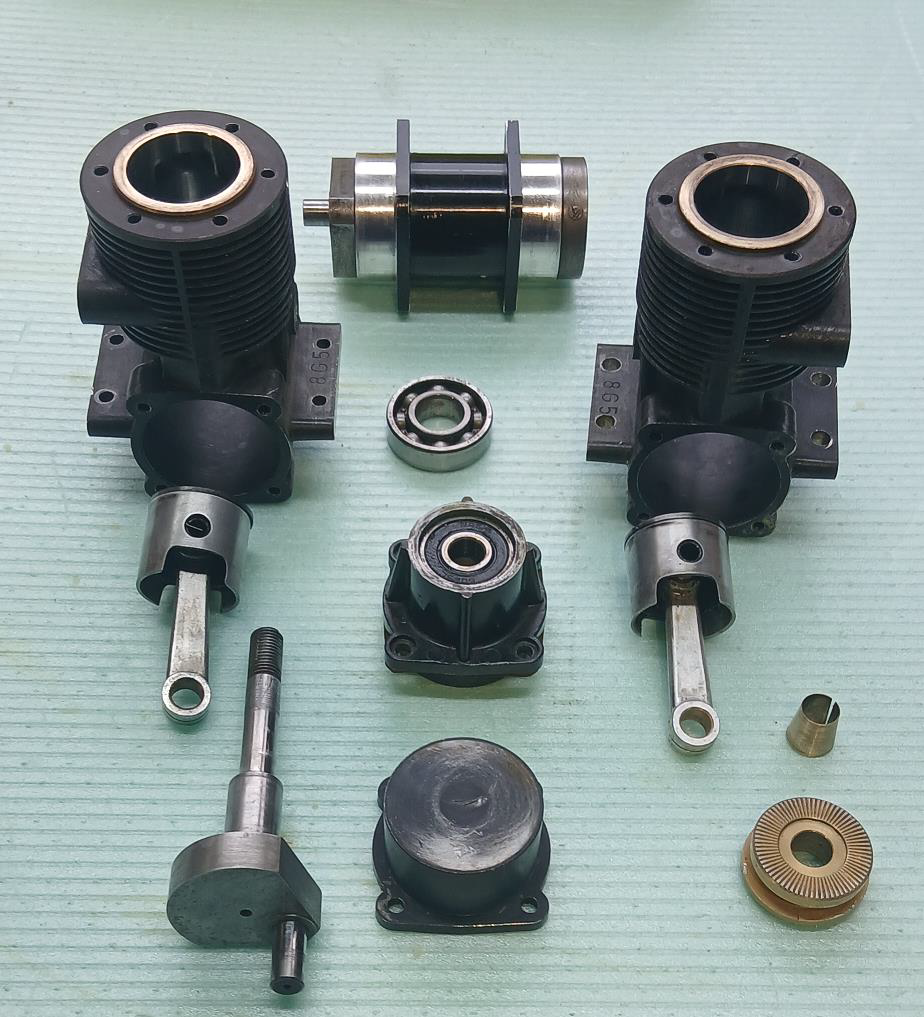
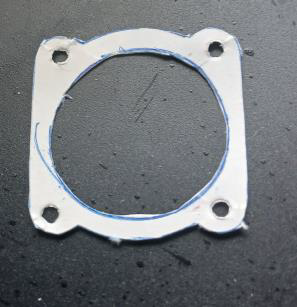
After cleaning all the parts and making one new gasket reassembly commenced. All the parts were good for reassembly, and reversing the strip down process got the engine(s) back into one piece lubricating the parts and checking that the parts rotated freely in the process.
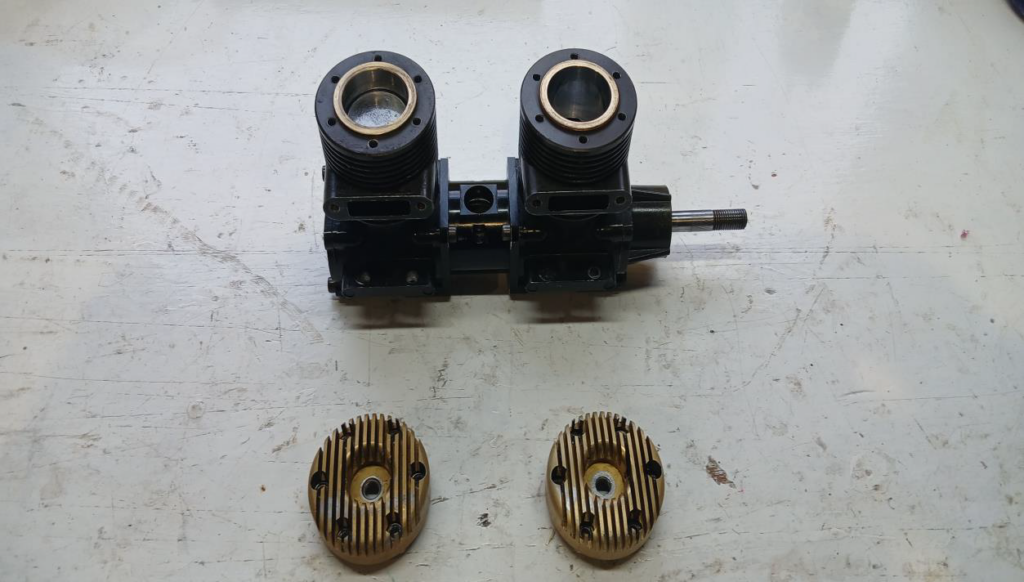
The final step was to make a test rig to allow the engine to be run “on the bench”. I expect the owner Jake will be keen to do this when we get better weather. Perhaps we could have a part two when it runs. On conclusion I think someone had filled the engine with oil to protect it, perhaps many years ago, and over time it became the crud in the engine.
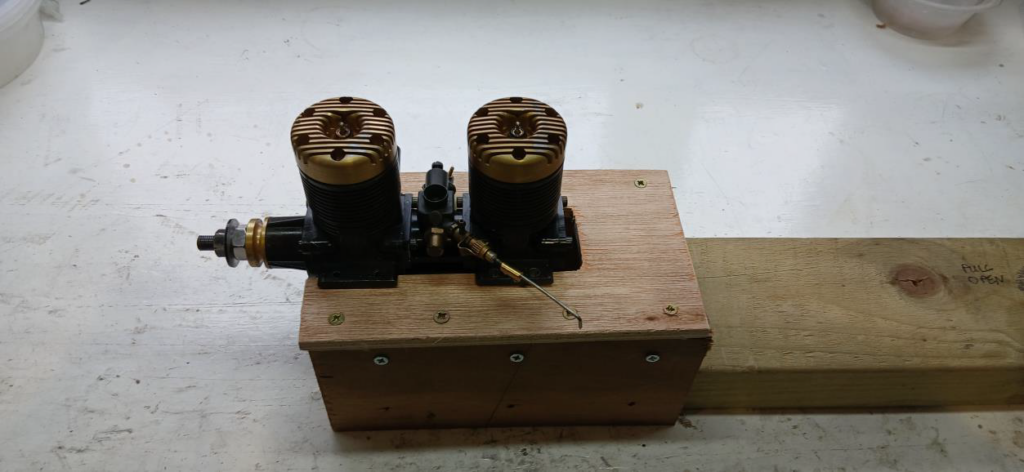
Well a very interesting engine, I look forward to seeing it run.
Next article is from Anthony our safety officer with regard to some reminders about flying field rules which you all agree to abide to when joining the club.
Safety Brief 2026
As I managed to dodge the safety brief at the latest Marton Institute social gathering I thought I would write something up for inclusion in the newsletter.
Some of us have been brave enough to get back to the field so its a good time to remember that as a club, our continued access to this hobby relies heavily on every single member understanding and adhering to both our local rules and national aviation laws.
Your Responsibilities: The CAA and BMFA Framework
Our club operates under the BMFA’s Article 16 Authorisation from the Civil Aviation Authority (CAA). This is a privilege that allows us to operate outside of the standard, more restrictive drone laws, but it comes with strict mandatory conditions:
- Legal Accountability: Every time you take off, you are legally operating an aircraft in UK airspace. You must comply with the Air Navigation Order, the BMFA Safety Codes, and CAA CAP722.
- Operator & Flyer IDs: It is a legal requirement that your CAA Operator ID is clearly and securely displayed on every aircraft you fly. Additionally, you must carry proof of your Flyer ID (or BMFA competency certificate) and valid BMFA insurance with you at the field.
- Full-Size Aircraft Always Have Priority: If a full-size aircraft approaches our flying area, you must immediately descend to a safe low altitude or land. A collision or near-miss with a full-size aircraft is considered a serious aviation incident and will always be deemed the model pilot’s fault.
- Incident Reporting: Under BMFA and CAA guidelines, any crash or near-miss that causes injury, damages third-party property, or involves full-size aviation must be reported. If this happens, contact a Committee Member immediately so the proper BMFA reporting procedures can be followed.
Local Field Rules
While the national rules govern how we fly, our local rules keep us safe where we fly. Please keep these site-specific boundaries in mind:
- Restricted Airspace: Never fly over the car park, the pits, Westfield Cottage, the Railway Line, or walkers on the eastern side of the field.
- Pit Safety: All models must be physically restrained (by a tether, stakes, or a helper) before starting an engine. Never stand in line with or in front of a running propeller.
- Flight Line Discipline: If three or more models are in the air, a Safety Marshal must be appointed. Their word is final. We also strongly recommend using a spotter to help keep an eye out for airspace hazards.
- Off-Site Retrievals: If your model goes down in the farmer’s field, do not contact the landowner directly. Report it to the Committee, who will arrange authorised access to retrieve it.
Incidents from 2025
To help us prepare for the year ahead, I have reviewed the incident logs from last season. Rather than pointing fingers, we want to highlight the overarching themes so we can all learn from them. Last year’s incidents broadly fell into three categories:
1. Mid-Air Structural and Mechanical Failures We recorded crashes caused by sudden structural failures (such as a wing separating during aerobatics) and internal mechanical failures (such as snapped servo arms and broken servo trays).
- The Lesson: Age and stress take their toll on our models. Pre-flight checks shouldn’t just be a quick wiggle of the sticks. Regularly inspect hinges, clevises, servo mounts, and high-stress structural points like wing dowels and rubber bands.
2. Pre-Flight Setup Errors One incident involved a model crashing because it was inadvertently launched on “low rates” that provided insufficient elevator authority to fly safely.
- The Lesson: Always double-check your transmitter switches and physically verify that control surface throws are moving the correct distance and direction before every single flight.
3. Airspace Intrusions and Situational Awareness We experienced a narrow miss with an unauthorised drone flying directly over our field, as well as an incident where a pilot had to take drastic evasive action (resulting in a crash) to avoid a low-flying full-size aircraft.
- The Lesson: We do not own the sky. Pilots must maintain constant awareness. This is why having a spotter is incredibly valuable, they can hear and see approaching hazards, approaching aircraft or stray drones, long before the pilot focused on their model will.
Finally, it’s worth pointing out despite a few mechanical issues and mid-air hiccups, none of the incidents led to any injuries or damage to anyone else’s property. That isn’t just down to luck; it’s a direct result of the discipline and sensible safety habits you all practice at the field. Because everyone looks out for each other and sticks to the rules, the only things that needed gluing back together were our own models. Let’s just keep up that same sensible approach and teamwork for 2026. Here’s to a safe and enjoyable flying season for everyone.
Anthony Ollerton
Annual Easter Egg Drop
Now before all the messages and comments start getting made yes this was held after Easter, the reason for this was the forecasted weather on Easter Monday was bad so the decision was made to reschedule the event for Sunday 19th April.
This turned out to be a dry sunny day but a rather chilly breeze was present which kept changing direction every five minutes.
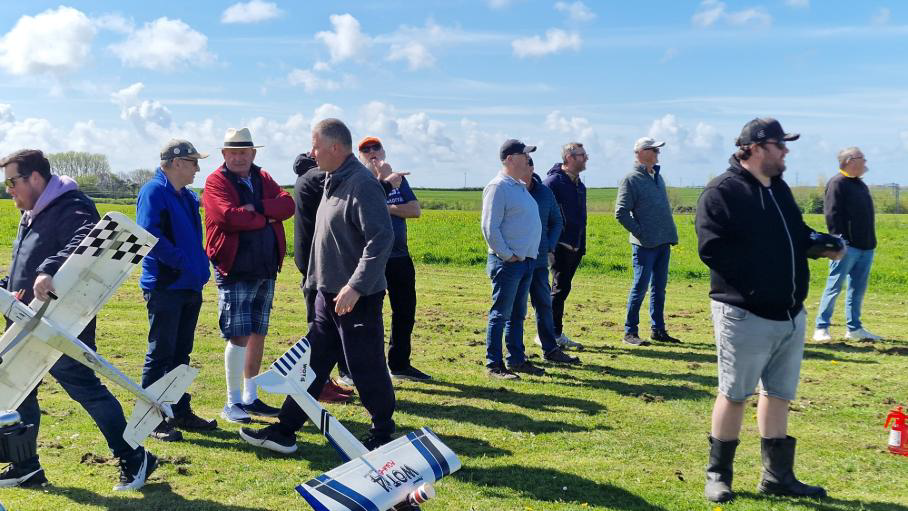
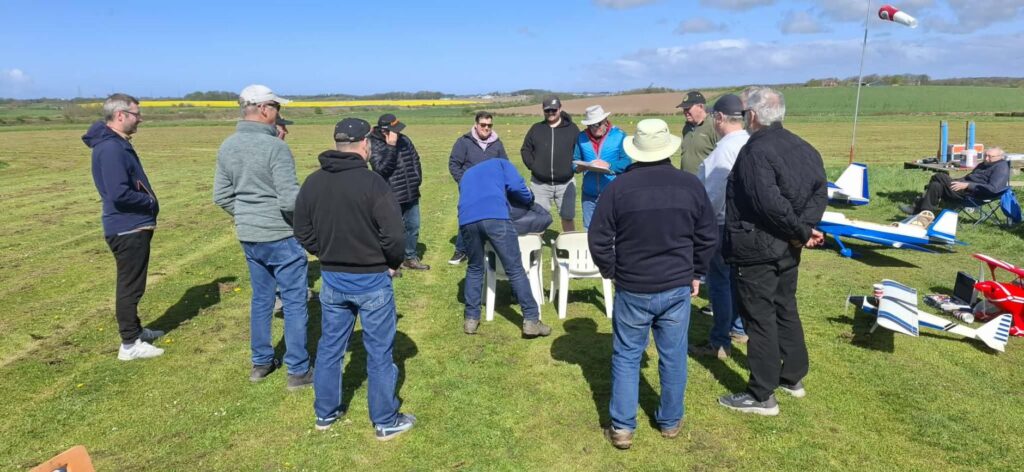
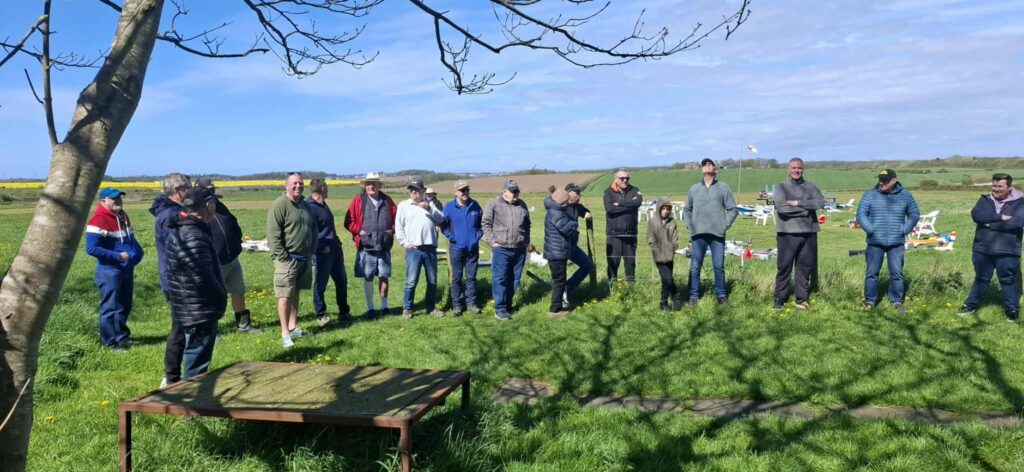
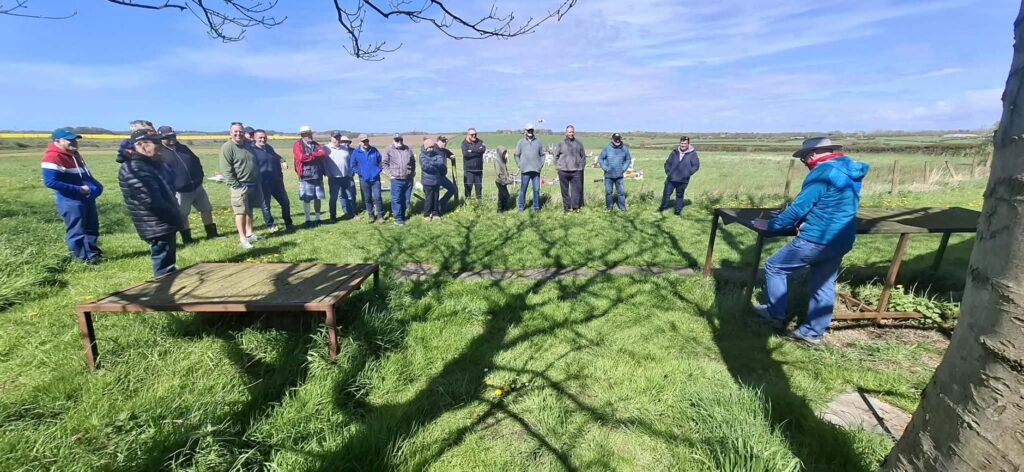
The turn out was excellent, the best turn out out for a few years and nice to see new members taking part.
For my sins I judged and marked the event, good job I am thick skinned, the abuse and comments were of an excellent standard with some people rising to new heights or should it be new lows ?? with helpful comments (not) !!!
For those of you who are not familiar with the format it is as follows
Three attempts at dropping a small balloon filled with water (easter egg substitute) at various point scoring zones marked out on the field.
Three attempts at a spot landing again using the scoring zones on the field.
A two minute flight which is timed by the judge, no timers allowed on the transmitter or sneaky phones in your pocket.
Finally the longest touch and go, so this is land on the strip, do not stop the aircraft, keep going on the ground and same heading !!! for as long as you dare before taking off again.
Now there are a few points to note about the competition.
Number 1 When dropping your egg/bomb always watch the plane do not watch the egg, I say this every year to the pilots.
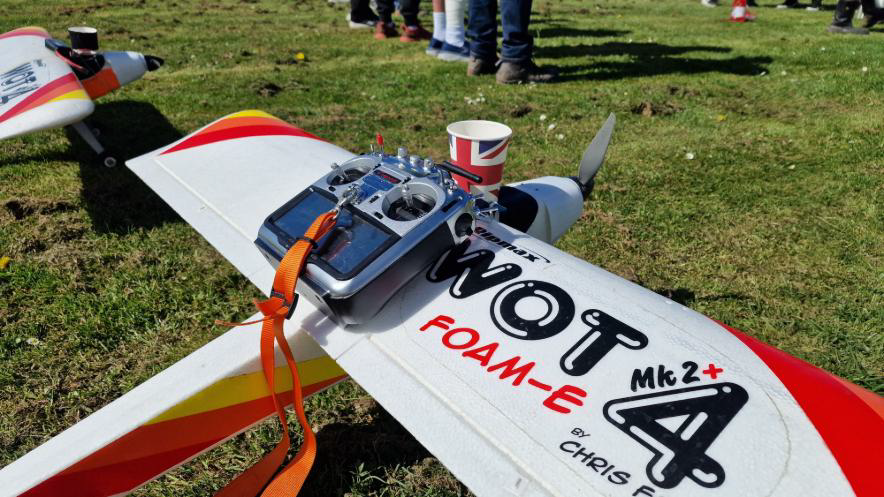
Well Dave Hindley do not heed the warning and managed to tent peg his foam Wot4 into the strip, full chat I reckon. A slight pause in the competition was needed whilst the slightly modified plane was dug out of the ground.
I don’t think that will fly again, as a caring sharing club everybody was really sympathetic to Dave as he did the walk of shame back to the pits, his egg/bomb did score five points though.
Number 2 If you try and flaunt the rules and or cheat the judge has the ability to deduct points, as the judge was me I had to do this during the competition.
Now the individual in question has a track record of trying to bend the rules and this year was the final straw. I am not going to name the individual because that would be childish however it was Mark Conlin !!
The rules are gong to be revised again for next year due to his childish antics.
I must mention Andy Harrision who in the timed two minute flight managed 1:59.4 probably the best result ever in all the years we have done the event.
Now to the results, the scores were doubled checked by Andy Moore (he used to work in a bank so he does not need his fingers and toes to add up) and the for the first time ever we had tied results !!!
Joint First Place Jason Reid & Jake reid Always popular winners
Joint Second Place Dave Jenkinson & Mark Conlin (despite his cheating !!)
Third Place Andy harrison
Across the winners there was only a two point difference again double checked by Andy Moore.
Thanks to everybody who turned up for the event it was a light hearted event with plenty of laughs please consider entering next year.
Below are some photos of the event.
Trainers/Trainees
The list of club trainers has been refreshed and their names are below.
A couple of the trainers are of an age where work does not get in the way and if contacted may be able to accommodate mid week sessions.
As a trainee get to know these trainers if needed ask for their phone numbers or use the Clubs messenger group to make contact with them.
Don’t rely on the same trainer all the time, all the trainers will offer the same amount of training and to the same standard/goal.
Training sessions are Wednesday evening and Sunday mornings weather dependant of course
Trainers :
Chris Vernon, Jason Reid, Jake Reid, Mark Conlin, Andy Harrison, Anthony Ollerton, Dave Hindley, Kev Watson
Regards Chris V